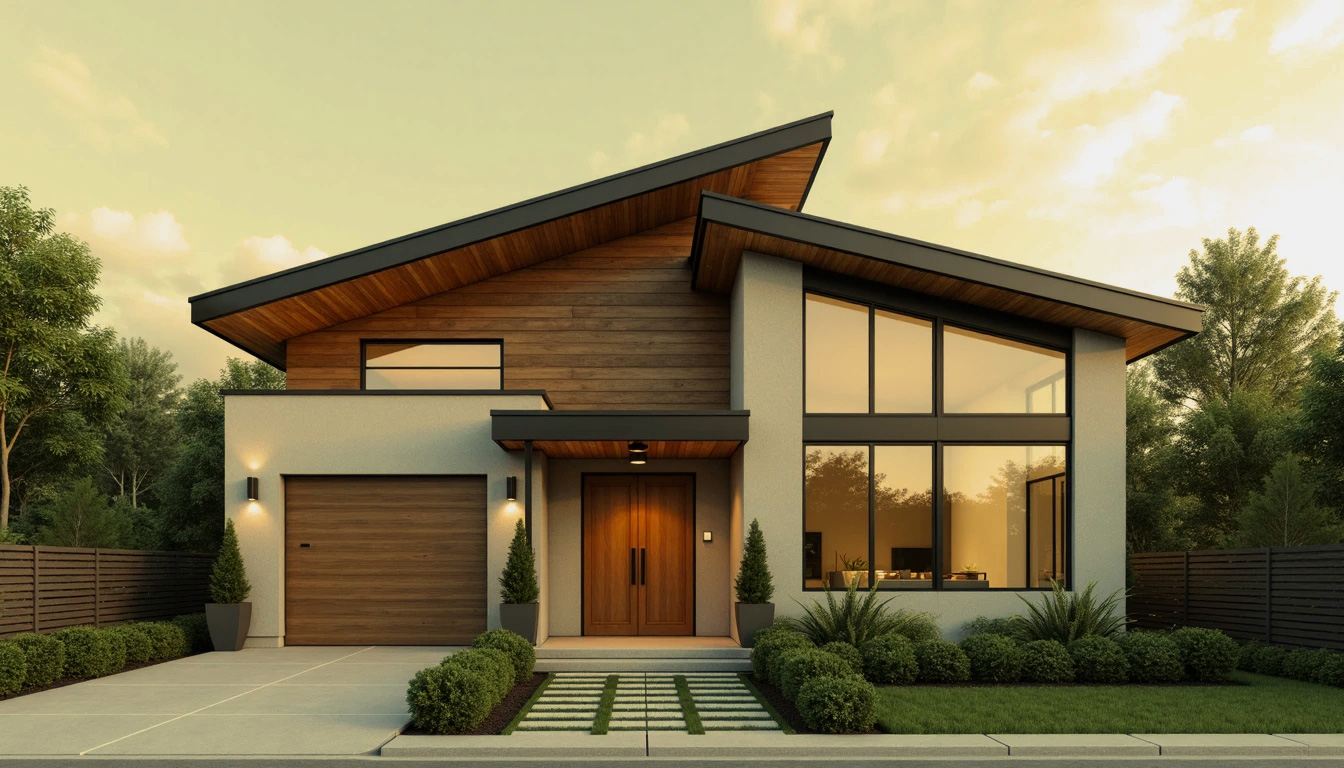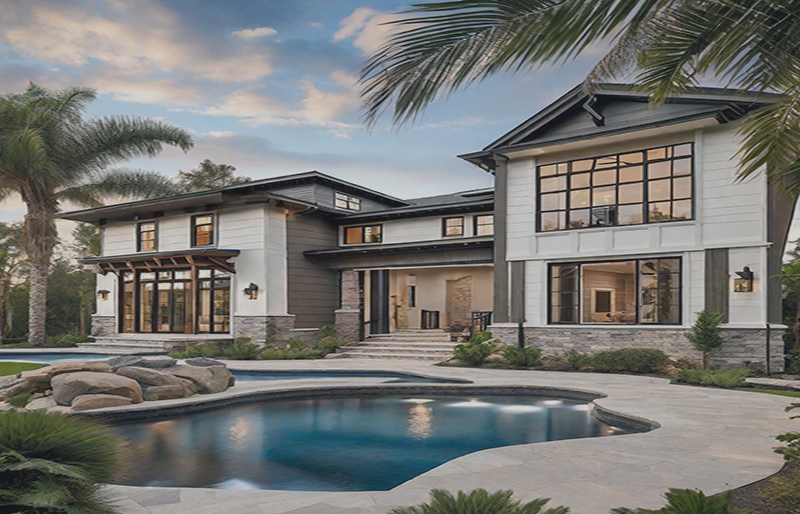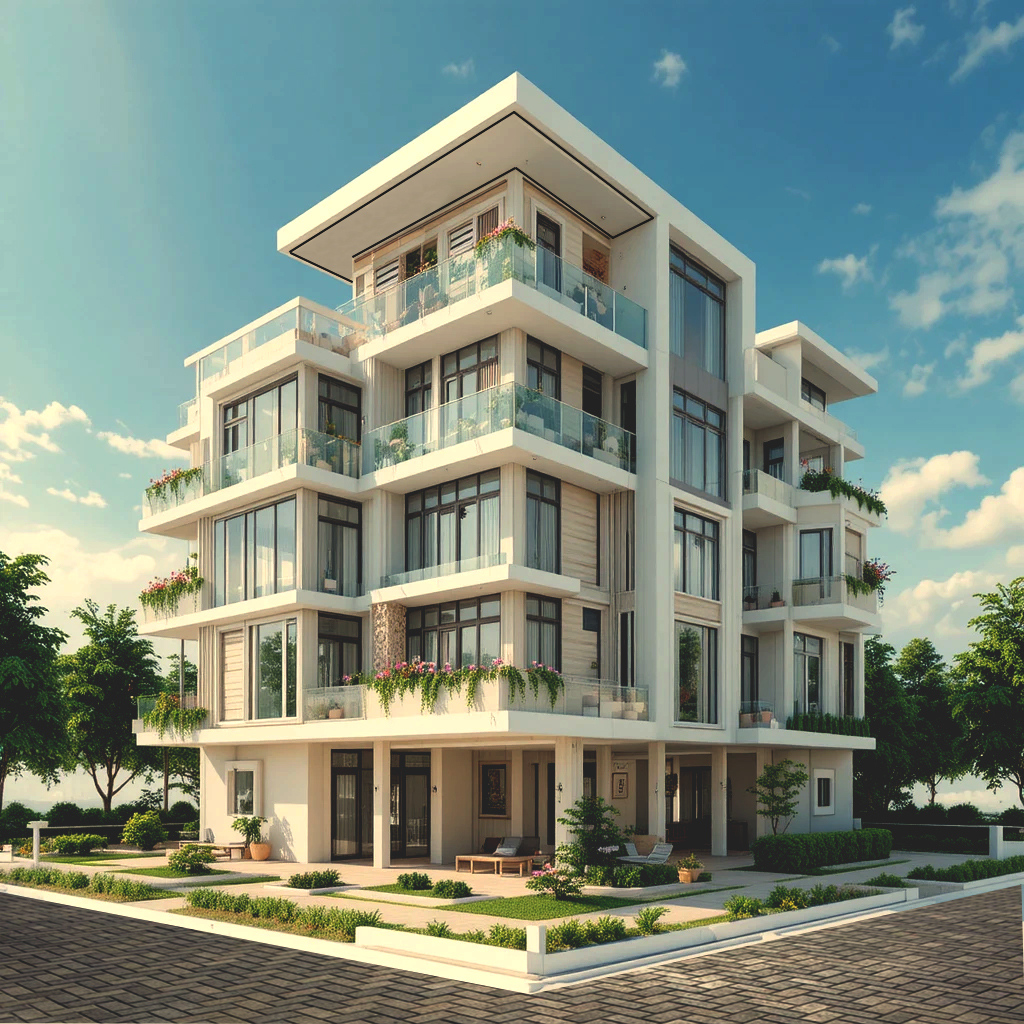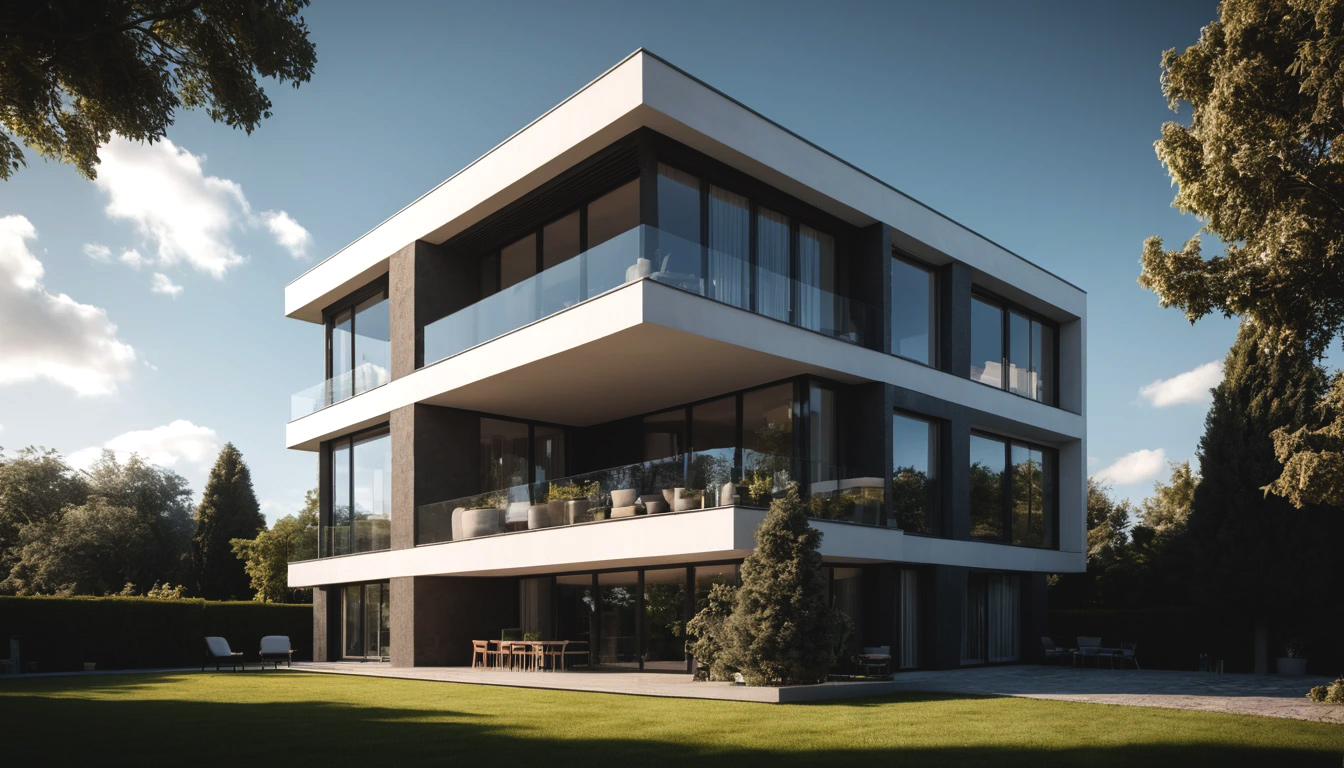
Before we draw a line we study the site. Solar path across all four seasons, prevailing winds by month, sight lines to every neighbor and every horizon feature, existing trees worth keeping, watersheds, and the grade change from every corner to every other corner. The building rotates, the roof pitches, the overhangs deepen — all in response to what the site already tells us, before we impose anything of our own.
The result is architecture that spends less energy because it is aligned with its climate rather than fighting it. A one-degree rotation can save five percent on cooling load in a hot climate. An overhang sized to the summer solstice sun blocks unwanted heat while letting winter light flood the same window. This is what Glenn Murcott means when he says he only wants to touch the earth lightly.
Our environmental renderings show the project inside its real neighborhood, with real horizons and real weather, so decisions are made in context. We include the ugly view as well as the beautiful one, because a window that ignores what is actually across the street is a lie the client will pay for every day.
For deeper study, read Christopher Day on places of the soul, Lisa Heschong on thermal delight in architecture, and any project by Rick Joy in the Sonoran desert to see what happens when a building is finally allowed to answer its site honestly.