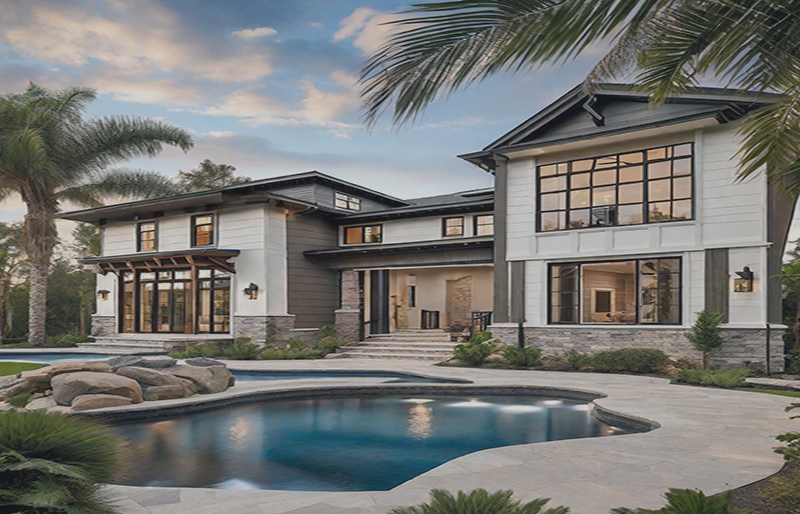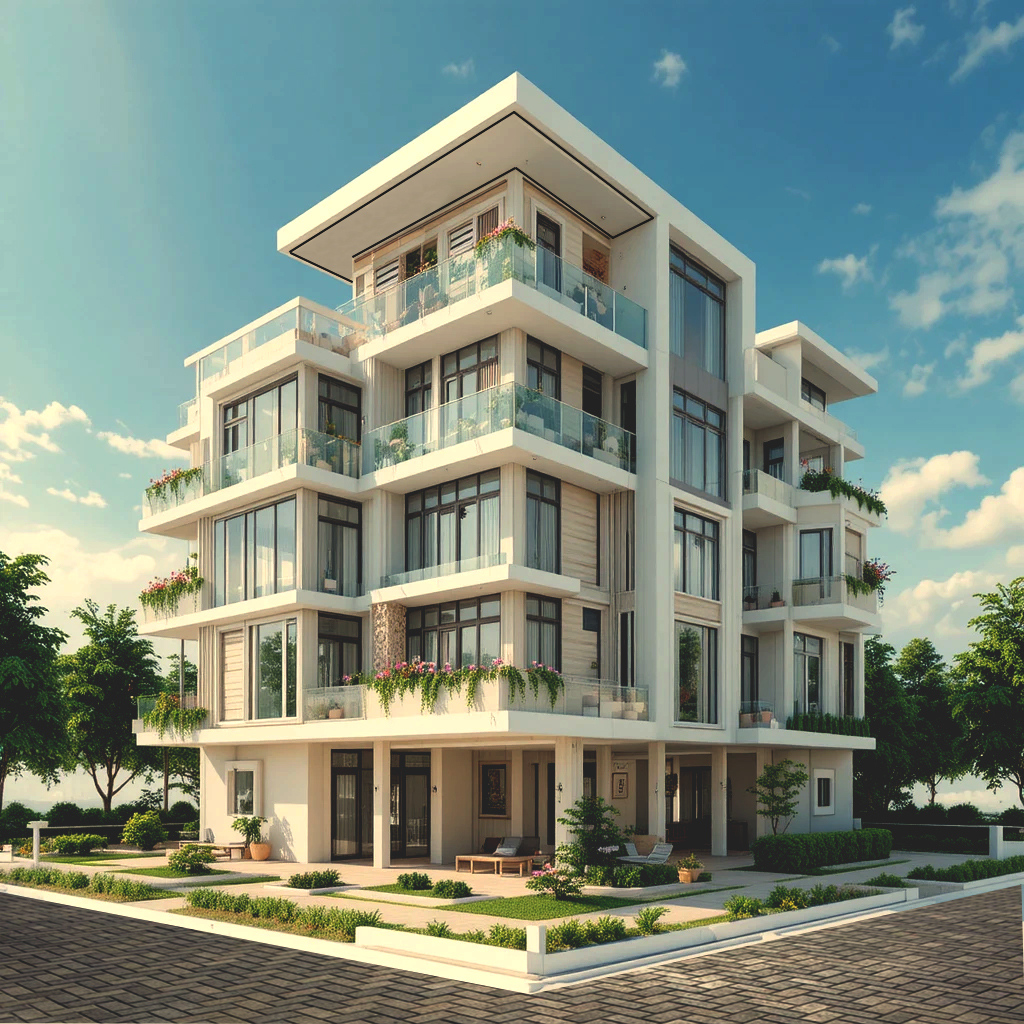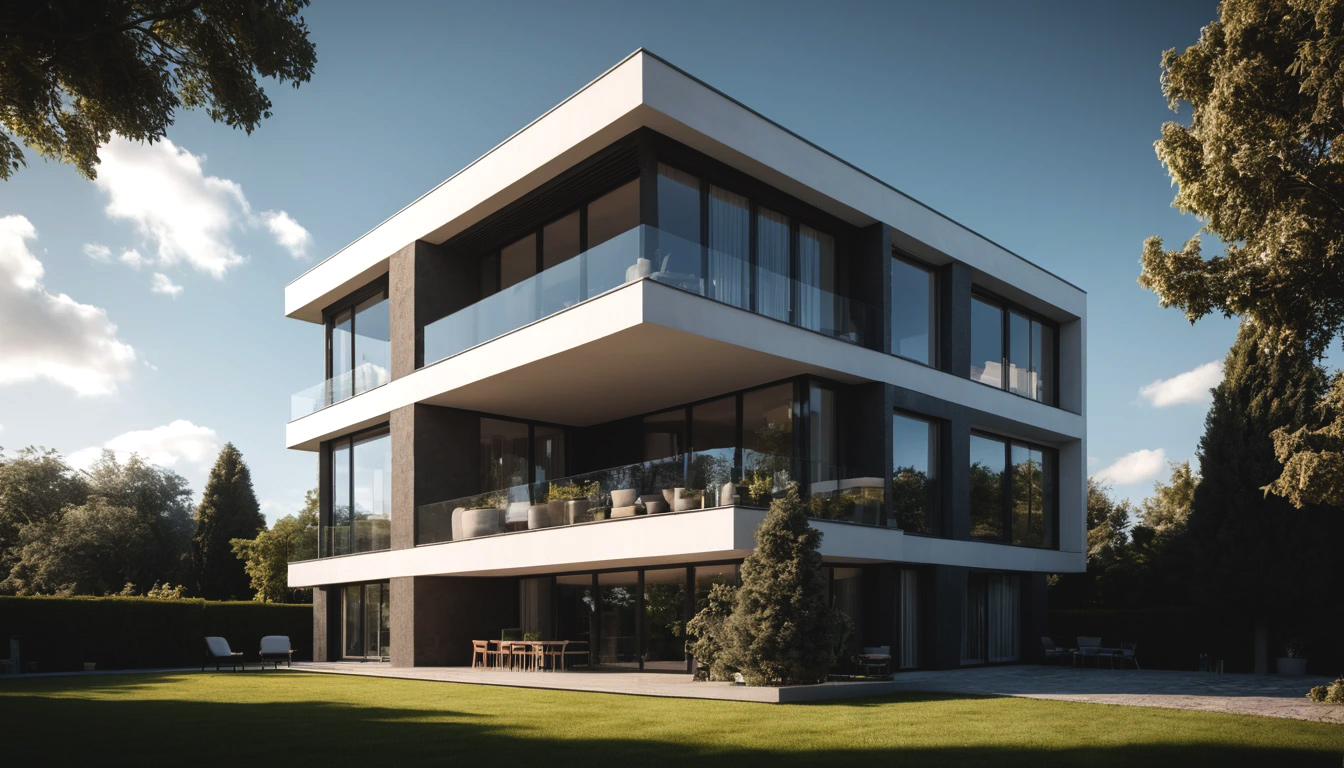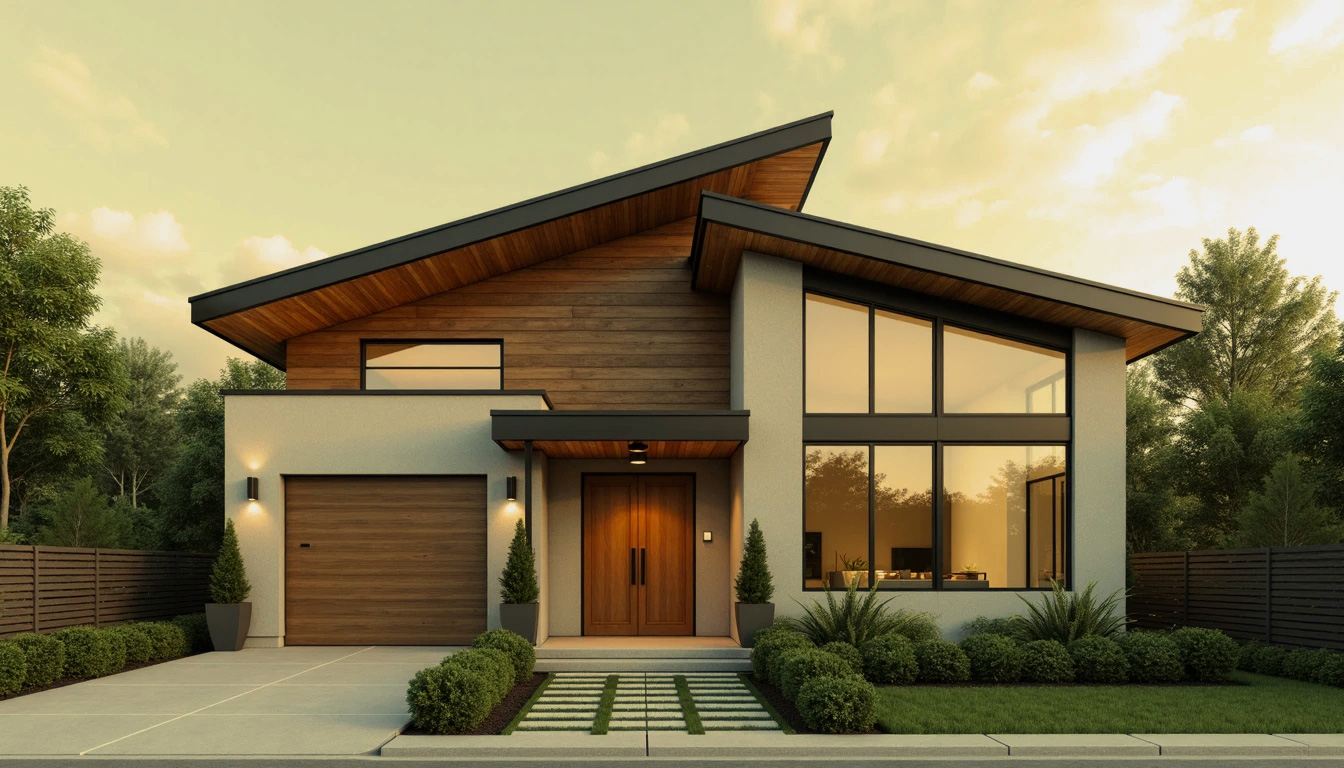
A facade is the first and last impression of a building, and often the only part the public will ever meet. We start with proportion: the golden relationships between openings, solids, and voids that the eye reads as harmony long before the mind names the style. Palladio worked from a set of ratios; so did the Bauhaus; so do we.
Rhythm comes next, established through window spacing, cladding joints, shadow lines, and the syncopation between them. A regular grid feels institutional; a broken grid feels arbitrary; the sweet spot is a base module varied at moments of program change. When you feel that a facade is composed rather than assembled, rhythm is the reason.
Materials are chosen for how they patina, not just how they photograph on day one. Standing-seam zinc chalks and softens. Board-formed concrete darkens in the rain and lightens in the sun. Thermally modified timber silvers to driftwood grey unless oiled every three years. We render every facade at year one, year five, and year fifteen so the client is signing up for the aging curve, not just the reveal.
Every facade study is rendered from street level, driveway, and drone angles, and we walk the client through each one. For deeper reading, study Gottfried Semper on the dressing of architecture, Herzog and de Meuron's material experiments in Basel, and the courtyard elevations of Louis Kahn at the Salk Institute, where a facade becomes pure light and shadow.