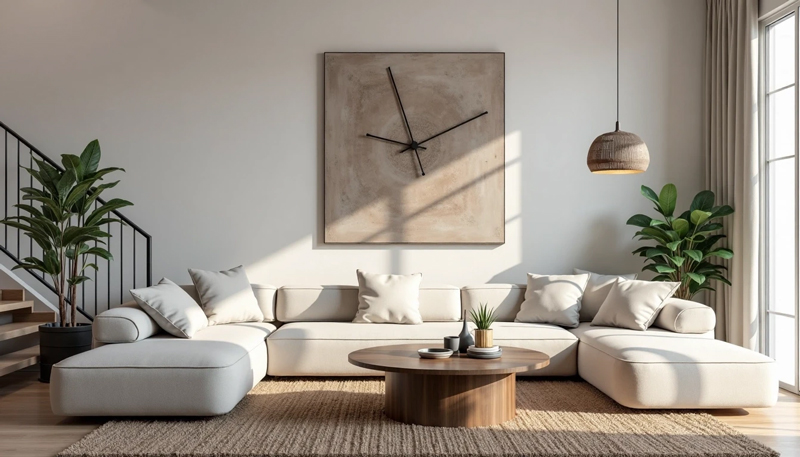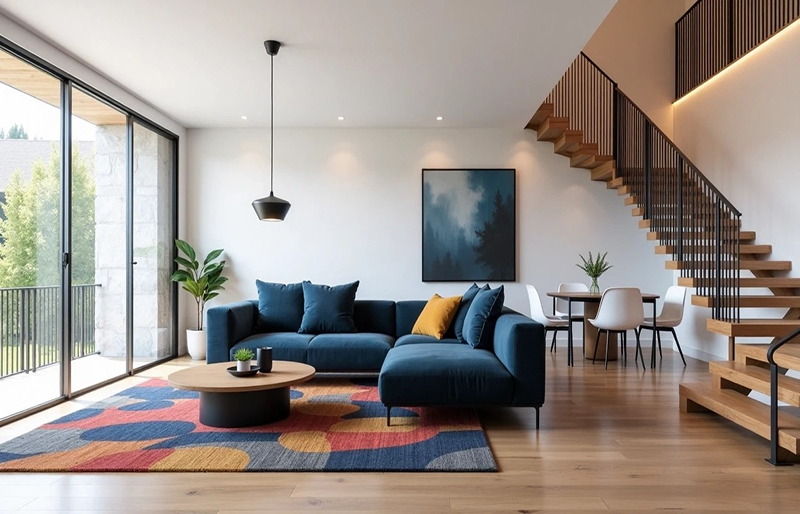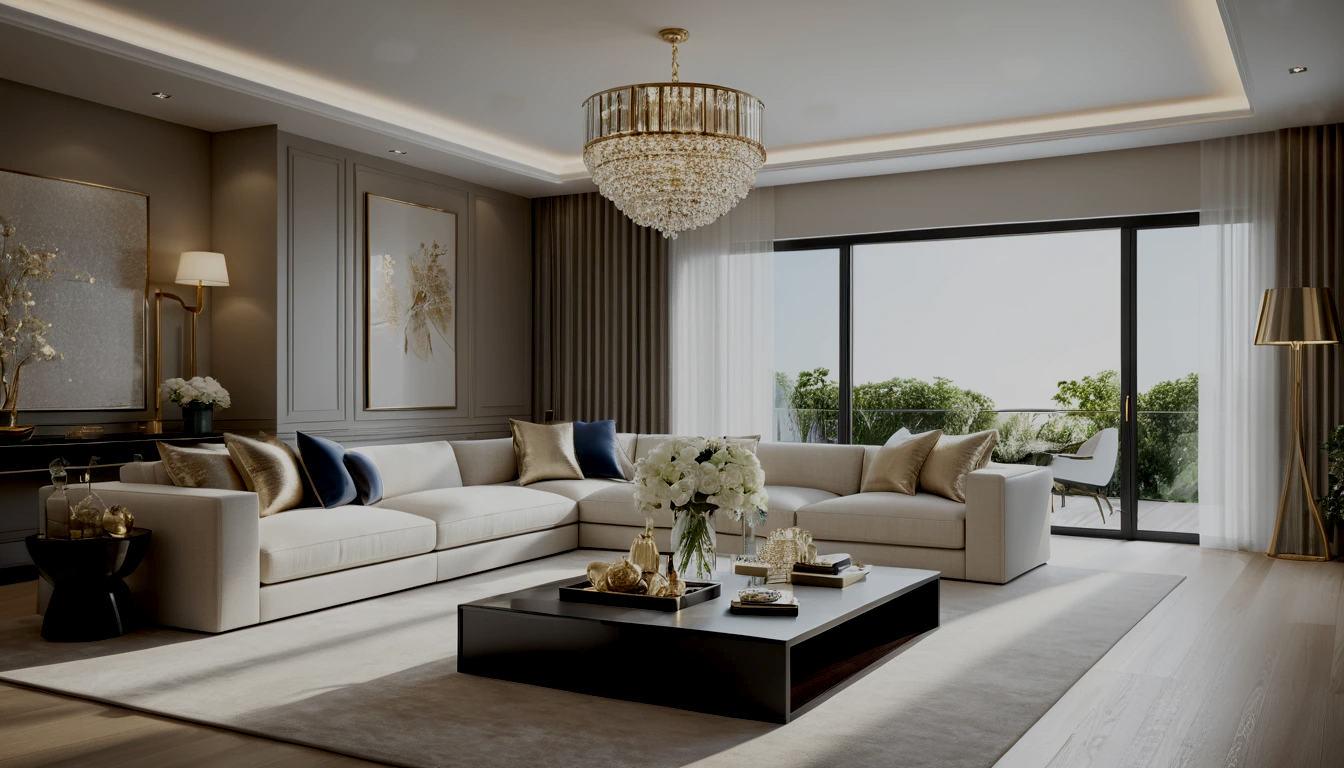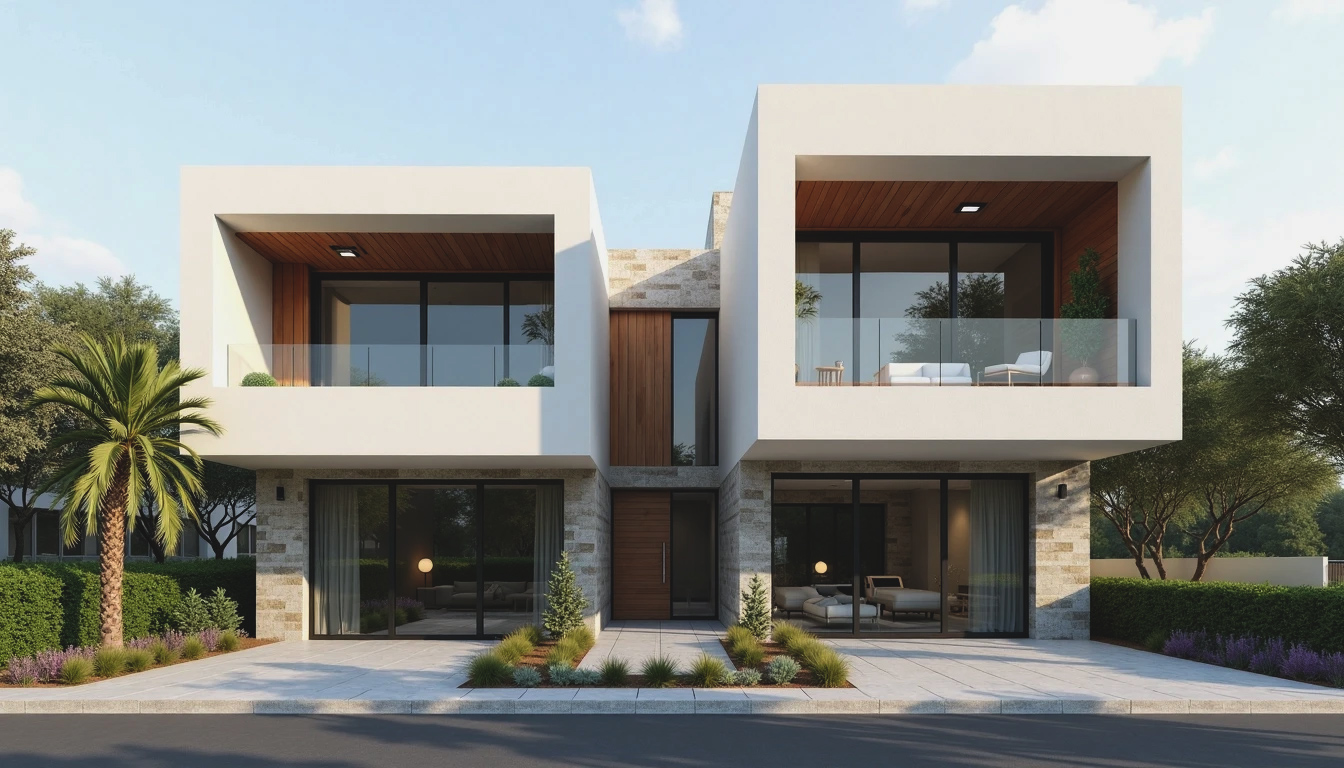
Lighting is the single biggest lever for mood, and the one most often value-engineered out of a project. We design in three layers. Ambient fills the volume with soft, general light, usually indirect from a cove or a large diffuser. Task focuses a tight beam where a hand needs to see: the cutting board, the desk, the reading chair. Accent is drama, aimed at art, texture, and architecture itself. Every layer sits on its own dimmer and, ideally, its own circadian schedule.
Color temperature is a design decision, not a fixture spec. We warm interiors to 2700K in living rooms and bedrooms, hold task areas at 3000K, and only push cooler for utility spaces. A CRI of 90 or above is non-negotiable for anywhere skin, food, or artwork will be seen.
In our renderings you see the space at 7 a.m., 3 p.m., and 9 p.m., so you can approve the atmosphere before the electrician cuts a single hole. We also model glare from every seated eye height, because a beautiful pendant that spears you in the retina at dinner is a design failure.
For further reading, study Richard Kelly, the lighting designer behind Mies van der Rohe and Louis Kahn, who codified the ambient/task/accent framework in the 1950s. Then look at any Tadao Ando interior to see architecture designed for one material only: light.